- Home
- All States
- Washington
- Seattle
Rehab in Seattle, Washington
11 verified treatment centers in and around Seattle.
Verified centers in and around Seattle
11 centers from our verified catalog are in Seattle or within 25 miles of it in Washington: 5 in Seattle itself and 6 in nearby towns, nearest first.
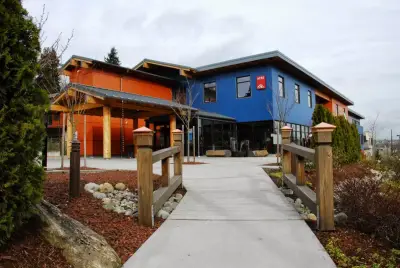
Asian Counseling and Referral Service
Seattle, WA
Consejo Youth and Family Services
Seattle, WA
Key Recovery and Life Skills Center
Seattle, WA
Riverton Place
Seattle, WA
Ryther
Seattle, WA
Consejo Counseling and Referral Servs
Bellevue, WA · 9 mi away
Suquamish Tribe Wellness
Suquamish, WA · 13 mi away
La Esperanza Health Counseling Servs
Lynnwood, WA · 15 mi away
Kent Youth and Family Services
Kent, WA · 17 mi away
Agape Unlimited
Bremerton, WA · 18 mi away
We Care Daily Clinics
Auburn, WA · 23 mi away
How this count is built: these are centers from our catalog of 1,194 verified centers nationwide, the same list as the Washington state guide (34 centers) and our treatment search. A center counts here if it is in Seattle or its town is within 25 miles of Seattle in Washington; distances are measured between town centers from the U.S. Census Bureau's 2023 Gazetteer.
SAMHSA locator listings for Seattle
SAMHSA lists 74 programs within 25 miles of Seattle in Washington (FindTreatment.gov records, imported October 2025); 36 of them have a street address in Seattle and are listed below. These are federal locator records, not our verified catalog, so they are counted separately from the centers above.
Nua Counseling
Seattle, WA
Sound Tukwila West
Seattle, WA
Consejo Youth and Family Services
Seattle, WA
Ryther
Seattle, WA
Peer Seattle
Seattle, WA
Seattle Sober Living
Seattle, WA
Sound Northgate
Seattle, WA
Sound Lake City Way
Seattle, WA
A Positive Alternative
Seattle, WA
Therapeutic Health Services Summit Branch
Seattle, WA
Therapeutic Health Services Rainier Branch
Seattle, WA
Lakeside Milam Seattle Outpatient
Seattle, WA
How this list is built: every center above has a street address in Seattle, Washington in its SAMHSA treatment-locator record. Another 8 records in our database carry Seattle as the city but give an address somewhere else, so they are not counted or shown on this page: 3 are in other Washington cities (Bellevue 1, Federal Way 1, Renton 1); 5 are outside Washington, including other states and countries. Statewide listings are in the Washington state guide.
The 25-mile SAMHSA figure above counts only locator records whose street address confirms their own town, with distances measured between town centers; it is a count of federal records, separate from our verified catalog.
Filed under Seattle, located in another Washington city:
- Asian Counseling and Referral Service — Bellevue, WA
- Catholic Community Services CReW Program — Federal Way, WA
- Evergreen Treatment Services South King County Clinic — Renton, WA
SEATTLE treatment profile
Addiction treatment options in Seattle
Levels of care available
| Level of care | SAMHSA listings in Seattle |
|---|---|
| Outpatient | 30 of 36 |
| Co-Occurring Mental Health | 13 of 36 |
| Residential Rehab | 3 of 36 |
| Detox | 1 of 36 |
| Sober Living | 1 of 36 |
Insurance accepted by Seattle centers
Payment types the centers report to the SAMHSA treatment locator, counted out of 36 Seattle listings. Federal records do not say which insurance companies a center has contracts with, so confirm your plan with the center or your insurer.
Show all 19 payment types
Substances & conditions treated
| Substance / condition | SAMHSA listings treating it |
|---|---|
| Drug Addiction | 28 of 36 |
| Co-Occurring Disorders | 25 of 36 |
| Smoking Cessation | 18 of 36 |
| Benzodiazepines | 6 of 36 |
| Synthetic Drugs | 6 of 36 |
| Alcohol | 5 of 36 |
| Chronic Relapse | 5 of 36 |
| Cocaine | 5 of 36 |
| Heroin | 5 of 36 |
| Marijuana | 5 of 36 |
| Opioids | 5 of 36 |
| Prescription Drugs | 5 of 36 |
| Ecstasy | 4 of 36 |
| Psychedelics | 3 of 36 |
| Methamphetamine | 2 of 36 |
Therapy approaches offered
Counts reflect services reported to SAMHSA by the 36 SAMHSA listings with a Seattle address shown above. Always verify current details directly with each facility.
Common questions
Rehab in Seattle: what people ask
How many rehab centers are in Seattle, Washington?
What levels of care are available in Seattle?
Which insurance plans are accepted at Seattle rehab centers?
How do I verify my insurance coverage?
Is help available 24/7?
Nearby in WASHINGTON
Other cities within Washington
What happens when you call
Finding treatment in Seattle
Seattle, Washington has 11 addiction-treatment facilities. The number, like most numbers in this space, tells you less than you would hope. That facility density is typical of a metro of this scale and generally means specialty programming (co-occurring, perinatal, adolescent) is available regionally if not always inside city limits. What is worth understanding is the specific shape of access — who these facilities serve, who they turn away, and why the two populations are not the same.
The Washington context
The Washington story reaches Seattle through specific mechanisms. Expanded Medicaid in 2014 under the ACA. Overdose rate 28.0 per 100,000. Seattle fentanyl mortality paired with east-of-Cascades rural provider shortage Each of those state-level facts has a local echo in what is available in Seattle and on what terms.
How access actually works in Seattle
Three moves compress the Seattle search: call your plan's behavioral-health line (not member services) for an in-network list within 25 miles; cross-check that list against SAMHSA's federal locator; schedule a PCP visit specifically to discuss substance use. The three together take a week and produce more useful direction than weeks of calling facility admissions lines.
Regional and nearby options
the size of the local network means clinical specialty is usually available within Seattle or immediately adjacent, without needing to widen the search radius substantially. The math is often simple: the travel cost of an extra 30 miles is usually worth the difference in clinical framework or specialty capacity that a major metro's facility mix cannot always provide.
Practical next steps
What consistently works better in Seattle than cold-calling admissions: clinical assessment first, benefits verification in writing second, facility selection third. In that order. Reversing is the most common source of the "they said they took my insurance but I got a $15,000 bill" stories.
Official resources
Last updated April 2026. Sources: SAMHSA Treatment Locator, CDC WONDER, KFF Medicaid Tracker, ASAM Criteria 4e. See our editorial policy.