- Home
- All States
- Illinois
- Glendale Heights
Rehab in Glendale Heights, Illinois
27 verified treatment centers in and around Glendale Heights.
Verified centers in and around Glendale Heights
27 centers from our verified catalog are in Glendale Heights or within 25 miles of it in Illinois, all of them in nearby towns, nearest first.
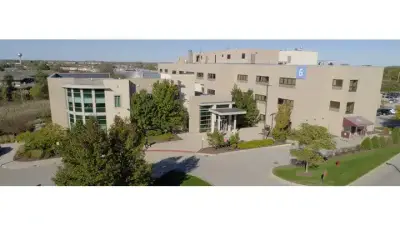
Alexian Brothers BH Hosp
Hoffman Estates, IL · 11 mi away
Pillars Community Health
La Grange Park, IL · 12 mi away
Substance Abuse Operations
Maywood, IL · 12 mi away
Access Northwest Family Health Center
Arlington Heights, IL · 13 mi away
Lifeline Professional Counseling Servs
Arlington Heights, IL · 13 mi away
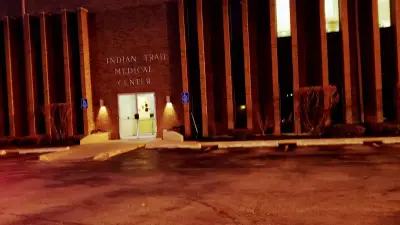
About Change Counseling
Elgin, IL · 15 mi away
Ecker Center for Behavioral Health
Elgin, IL · 15 mi away
Gateway Foundation
Aurora, IL · 15 mi away
Jimare Wellness Counseling Center
Cicero, IL · 17 mi away
Arbor Counseling Center
Buffalo Grove, IL · 18 mi away

Behavior Services Center
Skokie, IL · 19 mi away
Psychological Counseling Center
Deerfield, IL · 21 mi away

Arch
Chicago, IL · 21 mi away
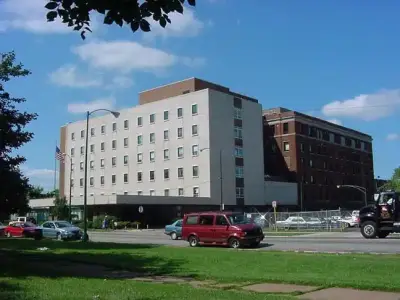
Association House of Chicago
Chicago, IL · 21 mi away
Center for Addictive Problems
Chicago, IL · 21 mi away
Child Guidance and Family Solutions
Chicago, IL · 21 mi away
Henrys Sober Living House
Chicago, IL · 21 mi away
Kirby Rehabilitation
Chicago, IL · 21 mi away
Loretto Hospital
Chicago, IL · 21 mi away
New Hope Community Service Center
Chicago, IL · 21 mi away
Phoenix House
Chicago, IL · 21 mi away
Prentice Place
Chicago, IL · 21 mi away
Rincon Family Services
Chicago, IL · 21 mi away
Thresholds
Chicago, IL · 21 mi away
Vivia Health Bucktown
Chicago, IL · 21 mi away
Vivia Health Gage Park
Chicago, IL · 21 mi away
Vivia Health Rogers Park
Chicago, IL · 21 mi away
How this count is built: these are centers from our catalog of 1,194 verified centers nationwide, the same list as the Illinois state guide (50 centers) and our treatment search. A center counts here if it is in Glendale Heights or its town is within 25 miles of Glendale Heights in Illinois; distances are measured between town centers from the U.S. Census Bureau's 2023 Gazetteer.
SAMHSA locator listings for Glendale Heights
SAMHSA lists 241 programs within 25 miles of Glendale Heights in Illinois (FindTreatment.gov records, imported October 2025); 1 of them has a street address in Glendale Heights and is listed below. These are federal locator records, not our verified catalog, so they are counted separately from the centers above.
How this list is built: every center above has a street address in Glendale Heights, Illinois in its SAMHSA treatment-locator record. Statewide listings are in the Illinois state guide.
The 25-mile SAMHSA figure above counts only locator records whose street address confirms their own town, with distances measured between town centers; it is a count of federal records, separate from our verified catalog.
GLENDALE HEIGHTS treatment profile
Addiction treatment options in Glendale Heights
Levels of care available
| Level of care | SAMHSA listings in Glendale Heights |
|---|---|
| Co-Occurring Mental Health | 1 of 1 |
| Residential Rehab | 1 of 1 |
Insurance accepted by Glendale Heights centers
Payment types the centers report to the SAMHSA treatment locator, counted out of 1 Glendale Heights listings. Federal records do not say which insurance companies a center has contracts with, so confirm your plan with the center or your insurer.
Substances & conditions treated
| Substance / condition | SAMHSA listings treating it |
|---|---|
| Co-Occurring Disorders | 1 of 1 |
| Smoking Cessation | 1 of 1 |
Therapy approaches offered
Counts reflect services reported to SAMHSA by the 1 SAMHSA listing with a Glendale Heights address shown above. Always verify current details directly with each facility.
Common questions
Rehab in Glendale Heights: what people ask
How many rehab centers are in Glendale Heights, Illinois?
What levels of care are available in Glendale Heights?
Which insurance plans are accepted at Glendale Heights rehab centers?
How do I verify my insurance coverage?
Is help available 24/7?
Nearby in ILLINOIS
Other cities within Illinois
What happens when you call
Finding treatment in Glendale Heights
Addiction-treatment coverage of Glendale Heights routinely treats "the city" as one unit. It is not. 27 facilities, varying clinical frameworks, varying payer-mix, varying outcomes. The useful question for a patient or family is not "what is in Glendale Heights" but "what specifically fits the situation we are in."
The Illinois context
Illinois context matters for Glendale Heights in a way that most local addiction coverage skips. The state expanded Medicaid in 2014 under the ACA. Its overdose rate runs 31.3 per 100,000. Cook County fentanyl-related mortality versus downstate MAT access gap That state-level reality is not abstract — it shows up at Glendale Heights's curb as "this facility takes Medicaid, that one does not," "this program does MAT, that one does not."
How access actually works in Glendale Heights
Most Glendale Heights families who find the right program first talk to a clinician whose incentives are not commercial. The second-best path is the SAMHSA federal helpline (1-800-662-HELP), which routes without a financial incentive. Cold-calling Glendale Heights facility admissions lines is productive but slow, and the answers differ depending on who picks up the phone.
Regional and nearby options
in a community this size, broader regional search (the nearest metro, and in some cases cross-state options where cost-sharing permits) is typically the realistic path. The math is often simple: the travel cost of an extra 30 miles is usually worth the difference in clinical framework or specialty capacity that a small community's facility mix cannot always provide.
Practical next steps
What consistently works better in Glendale Heights than cold-calling admissions: clinical assessment first, benefits verification in writing second, facility selection third. In that order. Reversing is the most common source of the "they said they took my insurance but I got a $15,000 bill" stories.
Official resources
Last updated April 2026. Sources: SAMHSA Treatment Locator, CDC WONDER, KFF Medicaid Tracker, ASAM Criteria 4e. See our editorial policy.