- Home
- All States
- California
- Bellflower
Rehab in Bellflower, California
34 verified treatment centers in and around Bellflower.
Verified centers in and around Bellflower
34 centers from our verified catalog are in Bellflower or within 25 miles of it in California, all of them in nearby towns, nearest first.
New Directions Healthcare
La Mirada, CA · 7 mi away
Tavarua Health Services
Pico Rivera, CA · 7 mi away
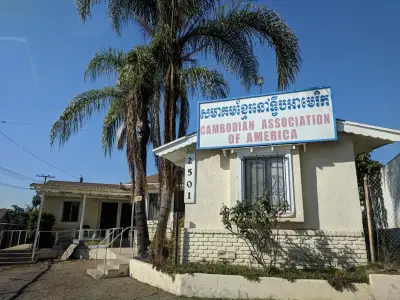
Cambodian Association of America
Long Beach, CA · 8 mi away
Gratitude Lodge
Long Beach, CA · 8 mi away
Safe Refuge
Long Beach, CA · 8 mi away
Coastal Comprehensive Treatment Center
Wilmington, CA · 11 mi away
SPIRITT Family Services
South El Monte, CA · 12 mi away
Recovery Beach
Garden Grove, CA · 12 mi away
Didi Hirsch Mental Health Services
Inglewood, CA · 13 mi away
Thelma McMillen Recovery Center
Torrance, CA · 14 mi away
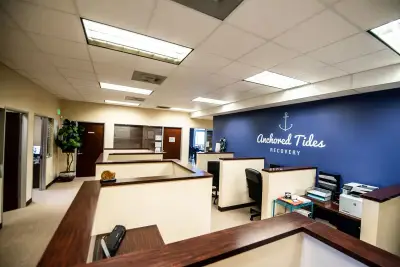
Anchored Tides Recovery
Huntington Beach, CA · 15 mi away
Buckeye Recovery Network
Huntington Beach, CA · 15 mi away
Coastwise Recovery Center
San Pedro, CA · 15 mi away
Crescent Moon Recovery
Fountain Valley, CA · 16 mi away
Newport Academy
Orange, CA · 17 mi away
Cornerstone Recovery
Santa Ana, CA · 18 mi away
Cornerstone of Southern California
Santa Ana, CA · 18 mi away
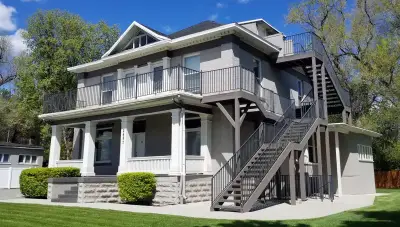
7th Street
Los Angeles, CA · 19 mi away
Clinica Monsenor Oscar A Romero
Los Angeles, CA · 19 mi away
Luxe Recovery
Los Angeles, CA · 19 mi away
Penny Lane Centers
Los Angeles, CA · 19 mi away
Revive Detox
Los Angeles, CA · 19 mi away
Sol Medical Group
Los Angeles, CA · 19 mi away
VA Greater LA Healthcare Systems
Los Angeles, CA · 19 mi away
Westwind Recovery
Los Angeles, CA · 19 mi away
Dedicato Treatment Center
Pasadena, CA · 19 mi away
Asana Recovery
Costa Mesa, CA · 20 mi away
Hotel California by the Sea
Costa Mesa, CA · 20 mi away
The Recovery Center
Costa Mesa, CA · 20 mi away
Refine Recovery
Beverly Hills, CA · 21 mi away

Anaheim Lighthouse
Anaheim, CA · 21 mi away
Hatch Behavioral Health
Anaheim, CA · 21 mi away
CLARE Matrix
Santa Monica, CA · 23 mi away
Ocean Recovery
Newport Beach, CA · 24 mi away
How this count is built: these are centers from our catalog of 1,194 verified centers nationwide, the same list as the California state guide (137 centers) and our treatment search. A center counts here if it is in Bellflower or its town is within 25 miles of Bellflower in California; distances are measured between town centers from the U.S. Census Bureau's 2023 Gazetteer.
SAMHSA locator listings for Bellflower
SAMHSA lists 266 programs within 25 miles of Bellflower in California (FindTreatment.gov records, imported October 2025); 1 of them has a street address in Bellflower and is listed below. These are federal locator records, not our verified catalog, so they are counted separately from the centers above.
How this list is built: every center above has a street address in Bellflower, California in its SAMHSA treatment-locator record. Another 1 record in our database carries Bellflower as the city but gives an address somewhere else, so it is not counted or shown on this page: 1 is in other California cities (Venice 1). Statewide listings are in the California state guide.
The 25-mile SAMHSA figure above counts only locator records whose street address confirms their own town, with distances measured between town centers; it is a count of federal records, separate from our verified catalog.
Filed under Bellflower, located in another California city:
- The Little Beach House — Venice, CA
BELLFLOWER treatment profile
Addiction treatment options in Bellflower
Levels of care available
| Level of care | SAMHSA listings in Bellflower |
|---|---|
| Residential Rehab | 1 of 1 |
Insurance accepted by Bellflower centers
Payment types the centers report to the SAMHSA treatment locator, counted out of 1 Bellflower listings. Federal records do not say which insurance companies a center has contracts with, so confirm your plan with the center or your insurer.
Substances & conditions treated
| Substance / condition | SAMHSA listings treating it |
|---|---|
| Alcohol | 1 of 1 |
| Benzodiazepines | 1 of 1 |
| Cocaine | 1 of 1 |
| Drug Addiction | 1 of 1 |
| Ecstasy | 1 of 1 |
| Heroin | 1 of 1 |
| Methamphetamine | 1 of 1 |
| Opioids | 1 of 1 |
| Psychedelics | 1 of 1 |
Therapy approaches offered
Counts reflect services reported to SAMHSA by the 1 SAMHSA listing with a Bellflower address shown above. Always verify current details directly with each facility.
Common questions
Rehab in Bellflower: what people ask
How many rehab centers are in Bellflower, California?
What levels of care are available in Bellflower?
Which insurance plans are accepted at Bellflower rehab centers?
How do I verify my insurance coverage?
Is help available 24/7?
Nearby in CALIFORNIA
Other cities within California
What happens when you call
Finding treatment in Bellflower
Addiction-treatment coverage of Bellflower routinely treats "the city" as one unit. It is not. 34 facilities, varying clinical frameworks, varying payer-mix, varying outcomes. The useful question for a patient or family is not "what is in Bellflower" but "what specifically fits the situation we are in."
The California context
The California story reaches Bellflower through specific mechanisms. Expanded Medicaid in 2014 under the ACA. Overdose rate 27.9 per 100,000. stark contrast between well-resourced urban programs and underserved inland counties Each of those state-level facts has a local echo in what is available in Bellflower and on what terms.
How access actually works in Bellflower
The Bellflower access question rewards patience and specific questions. The useful first step is rarely the closest facility — it is an evaluation by someone whose incentives are clinical, not financial. PCPs in Bellflower prescribe MAT now; licensed substance-use counselors do initial assessments; federal helplines route without a commercial incentive. Any of those three beats cold-calling facility admissions.
Regional and nearby options
in a community this size, broader regional search (the nearest metro, and in some cases cross-state options where cost-sharing permits) is typically the realistic path. The worst version of the Bellflower search is the one that stops at the city line. The best version expands to the regional level, where clinical specialty actually clusters.
Practical next steps
The next productive step in Bellflower is boringly practical: call a primary-care doctor. PCPs now routinely prescribe buprenorphine, can initiate MAT, and have access to referral networks that the commercial side of the industry does not feed on. A PCP visit costs less and produces fewer surprises than a cold call to a Bellflower facility admissions line.
Official resources
Last updated April 2026. Sources: SAMHSA Treatment Locator, CDC WONDER, KFF Medicaid Tracker, ASAM Criteria 4e. See our editorial policy.